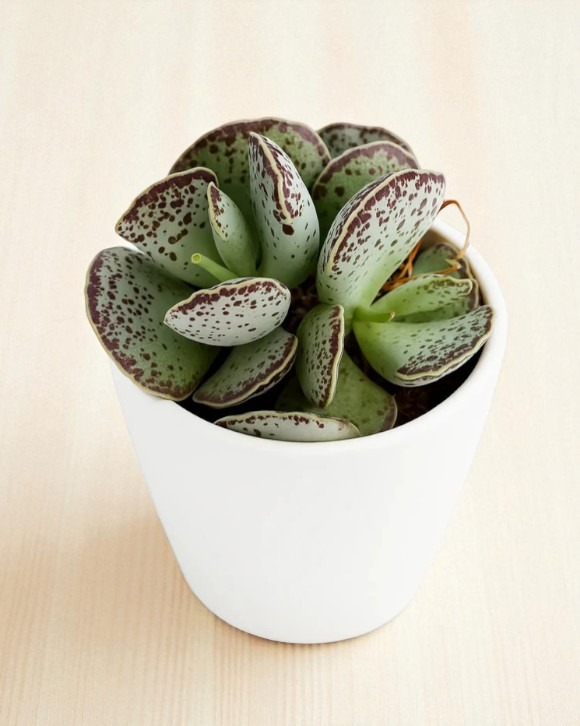
Adromischus Cooperi
A unique and eye-catching succulent with thick green leaves beautifully dotted with natural red spots, perfect for adding a modern touch to homes and workspaces.
-
Plant Type: Succulent (Adromischus Cooperi)
-
Leaf Feature: Thick, fleshy green leaves with red speckled patterns
-
Placement: Ideal for indoor spaces, desks, shelves & balconies
-
Watering: Low water requirement
-
Light: Bright indirect sunlight
-
Maintenance: Easy to care, beginner-friendly
-
Use: Home décor, office décor, gifting
₹199.00
In stock
Important Notice: When replacing damaged plants, you must record an unpacking video of the package within 12 hours of delivery.
All plants are shipped bare-rooted.
Adromischus Cooperi, commonly known as the Plover Eggs Plant, is a small, slow-growing succulent admired for its thick green leaves marked with unique purple-brown spots. Its compact size and unusual foliage make it perfect for small pots, succulent arrangements, and indoor plant collections. This plant is low-maintenance and ideal for beginners.
How to Grow and Care for Adromischus Cooperi
Light requirements
Adromischus Cooperi grows best in bright indirect light to partial sun.
It needs 3–5 hours of soft sunlight daily for healthy growth. Avoid harsh direct afternoon sun as it may cause leaf burn.
Temperature and humidity
This plant prefers moderate to warm temperatures between 18°C to 30°C.
It thrives in low humidity and should be protected from frost and extreme cold.
Soil and potting
Use well-draining succulent soil.
A mix of potting soil + sand + perlite works best to prevent water retention.
Plant in a pot with proper drainage holes.
Watering
Adromischus is drought-tolerant and requires minimal watering.
Allow the soil to dry completely between watering.
Water lightly every 10–15 days in summer and reduce watering in winter.
Fertilization
Feed with a diluted succulent fertilizer once a month during the active growing season. Avoid overfeeding.
Propagation
This plant can be propagated through:
-
Leaf cuttings
-
Stem cuttings
Allow the cuttings to dry and callus before planting.
Pruning and grooming
Minimal pruning is required.
Remove dry or damaged leaves to keep the plant neat and healthy.
Pests and diseases
Generally low-maintenance and pest-resistant, but occasionally may get:
-
Mealybugs
-
Aphids
Treat with neem oil or rubbing alcohol if needed.
Related products
Out of stock
Out of stock
Out of stock