

Overwatering is the number one reason succulents die, especially in humid and monsoon-prone climates like India. Succulents store water in their leaves, so when they receive too much moisture, their roots and stems begin to rot. Many plant lovers throw away their plants when they see soft, yellow, or black leaves, but the truth is that most overwatered succulents can still be saved if treated quickly.
In this guide, you will learn how to identify overwatering, remove rot, and bring your succulent back to life.
Signs Your Succulent Is Overwatered or Rotting
If you notice any of the following, your plant is in danger:
- Leaves are yellow, transparent, or soft
- Leaves fall off easily when touched
- Stem looks black, brown, or mushy
- Soil stays wet for many days
- Plant smells bad or looks moldy
- Plant looks droopy even though soil is wet
These are clear signs of root or stem rot.
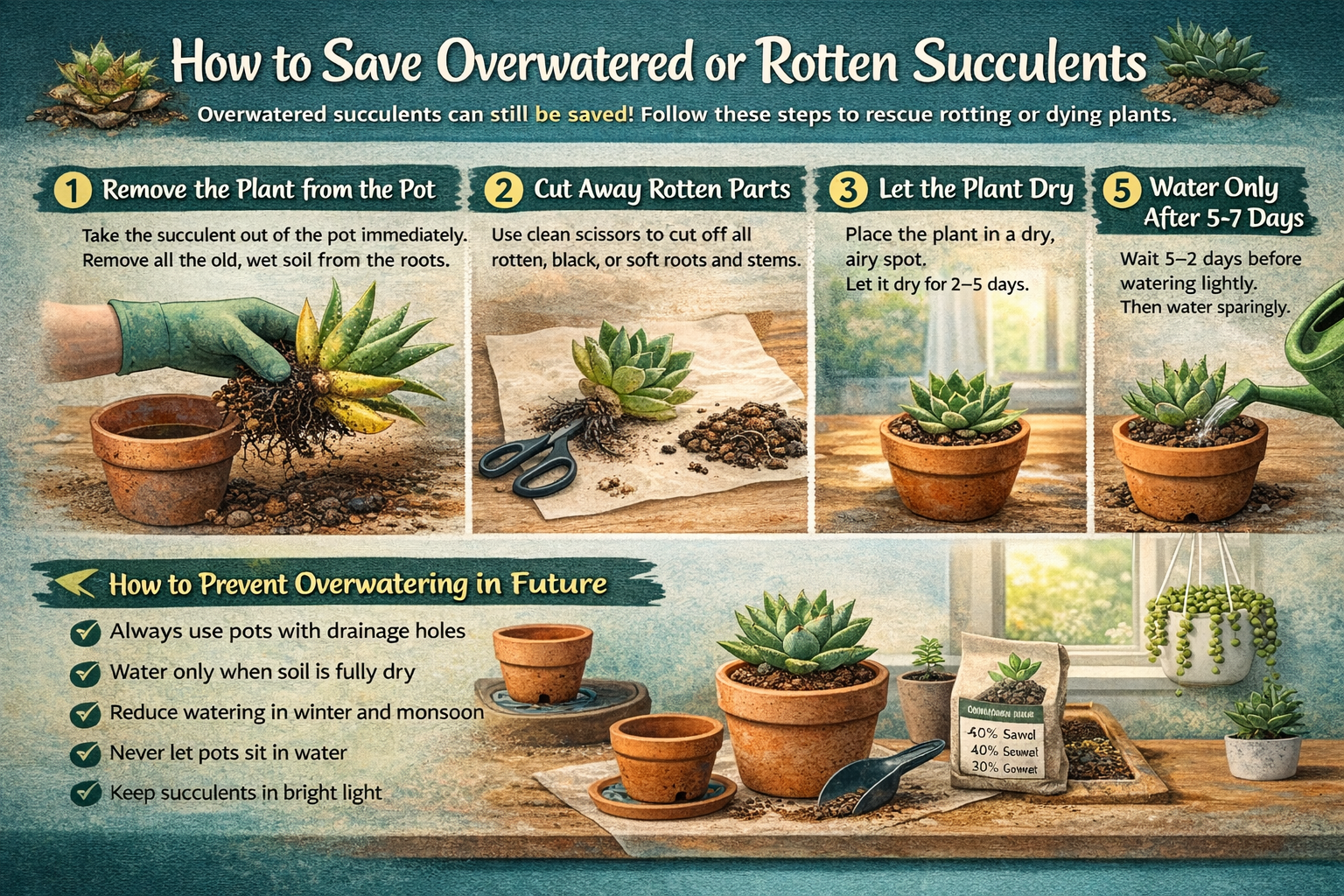
Step 1: Remove the Plant from the Pot
Take the succulent out of the pot immediately.
Do not wait.
Gently remove all the soil from the roots.
Shake off as much wet soil as possible.
If roots look:
- White and firm → healthy
- Brown, black, slimy → rotten
Step 2: Cut Away All Rotten Parts
Use a clean knife or scissors.
Cut off:
- All black or soft roots
- Mushy stems
- Any leaves touching rot
Keep only the firm green or white parts.
If the base stem is rotten, cut above it until you reach healthy tissue.
Step 3: Let the Plant Dry
Place the cut plant in a dry, airy place (no direct sun).
Let it dry for 2 to 5 days so the cut area can heal and form a callus.
This step is very important — it prevents further infection.
Step 4: Replant in Dry Succulent Soil
Use fresh, dry, well-draining soil.
Ideal mix:
- 40% sand or perlite
- 40% garden soil
- 20% compost
Do NOT use the old wet soil.
Plant the succulent gently and do not water.
Step 5: Wait Before Watering
After replanting:
- Wait 5–7 days before watering
- Then water lightly
Roots need time to regrow.
Never water immediately after repotting.
How to Save If Roots Are Fully Rotten
If all roots are gone but stem is healthy:
- Cut the healthy stem
- Let it dry for 3–4 days
- Plant it like a cutting
- New roots will grow
Succulents are very good at regenerating.
How to Prevent Overwatering in Future
- Always use pots with drainage holes
- Water only when soil is fully dry
- Reduce watering in winter and monsoon
- Never let pots sit in water
- Keep plants in bright light
Conclusion
An overwatered succulent is not a dead succulent. With quick action, dry soil, and patience, most rotting plants can be saved. Succulents love dry conditions, fresh air, and sunlight — not wet soil. With proper care, your rescued succulent will grow healthy and strong again
